 Back to Wildlife & Safari
Tarangire National Park
Overview & Highlights
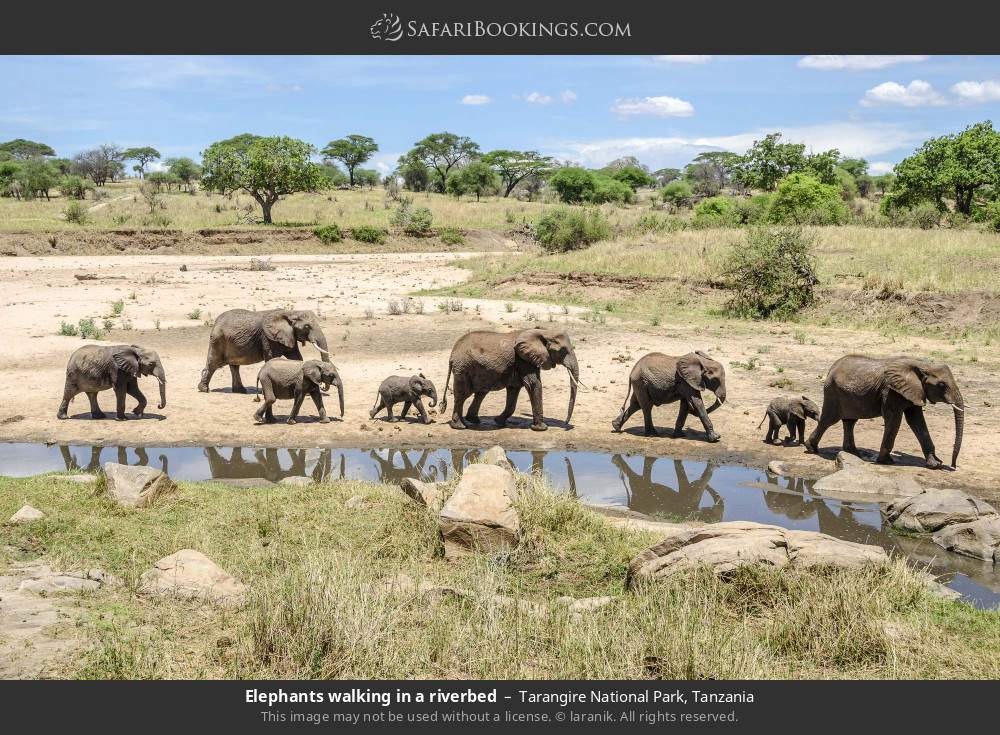
Tarangire National Park is famous for having one of the largest concentrations of elephants in Africa and being dotted with ancient, iconic baobab trees that dominate the landscape. During the dry season (June to October), the Tarangire River becomes the only source of water in the region, drawing thousands of animals — including wildebeest, zebras, giraffes, buffaloes, and elands — from the surrounding Masai steppe. Lion and leopard sightings are common near the water sources.
What We Love
- Massive elephant population (herds up to 300)
- Ancient baobab trees dominating the plains
- Spectacular dry season river wildlife viewing
- Walking safaris and night game drives with armed rangers
- Much quieter and less crowded than northern neighbors
Keep in Mind
- Wildlife viewing disperses during the wet season
- Woodlands have active, biting tsetse flies
Wildlife & Birds
Wildlife Highlights
- Home to one of Africa's highest concentrations of elephants
- Sightings of up to 300 elephants digging dry riverbeds for water
- Unique antelopes including fringe-eared oryx and gerenuk
Animal Abundance Index(scraped from safaribookings.com)
Lion
CommonLeopard
RareCheetah
RareElephant
AbundantBlack Rhino
NoneWhite Rhino
NoneBuffalo
CommonZebra
CommonWildebeest
CommonHippo
CommonGiraffe
CommonSpotted Hyena
CommonAfrican Wild Dog
RareBird Watching
550+ SpeciesTarangire is a premier birding hotspot. Over 550 species breed in the swamps, including yellow-collared lovebirds, red-bellied parrots, and rufous-tailed weavers.
Best Time & Climate
June to October is peak season. The shrinking Tarangire River becomes a magnet for migrating mammals. Wet season viewing is slow.
☀️ Dry Season
June to October: Animals congregate along the Tarangire River. Sparse vegetation makes game spotting easy.
🌧️ Wet Season
November to May: Thick green vegetation. Wildlife disperses into the Maasai steppe. Scenic but fewer animals.
Monthly Visitor Guide
Warm, dry days and mild nights. Daytime temperatures average 27°C/81°F. Night temperatures average 16°C/61°F.
Climate Chart (Temperature & Rainfall)
Getting There
Tarangire is located about 120km southwest of Arusha and is reached in under 2.5 hours on fully paved roads.
Driving Routes Matrix
| Route From | Distance (km) | Est. Time | Road Condition |
|---|---|---|---|
| Arusha | 120 km | 2 hrs 30 mins | Fully paved tarmac |
| Manyara | 70 km | 1 hrs 30 mins | Paved tarmac |
✈️ Air Travel & Local Airstrips
Scheduled flights land at Manyara Airstrip or Kuro Airstrip inside the park.
Safety, Malaria & Guidelines
Operational Advisory
Always obey local safety parameters, environmental codes of conduct, and instructions from park rangers or guides.
It is very safe to travel in Tarangire National Park. Crime against tourists is virtually unheard of in Tanzania’s parks and reserves. You should take normal safety precautions when driving between parks, and in cities and towns, but incidents are rare, especially when on an organized safari. Tarangire is situated about 120km southwest of Arusha.
🦟 Malaria & Health Advisory
Malaria is present in most wildlife reserves in Tanzania. It is strongly recommended to consult a travel clinic for antimalarial prescription. Use mosquito repellent containing DEET and wear light-colored, long-sleeved clothes in the evening.
TripAdvisor Traveler Reviews
Traveler feedback:
1. 'Unbelievable elephant herds! We saw at least 200 drinking from the riverbed at once. The baobabs are magnificent.' (Rating: 5/5, Date: May 2026)
2. 'Lions were resting right under the shade of a baobab. Very quiet compared to Ngorongoro.' (Rating: 5/5, Date: April 2026)
3. 'Excellent safari experience. Bring strong insect repellent as tsetse flies are active in wooded areas.' (Rating: 4/5, Date: March 2026).
Configure Adventure
Add this attraction to your trip dashboard. Once added, you can customize your overall budget.
Find Stays Near Attraction
Get real-time availability and discount rates for lodges near Arusha via the LiteAPI hotels engine.